When you buy through our links, we may earn a commission. An affiliated entity may offer products or services. Learn more.
How VitalSleep Compares
| Model | Type | Score | Price | Best for | |
|---|---|---|---|---|---|
| VitalSleep (this review) | Adjustable MAD | 8.8 | $119.95 | Best warranty | Check price |
| SnoreRx Plus | Adjustable MAD | 9.0 | $99.99 | Maximum adjustability | Check price |
| ZQuiet | Living-hinge MAD | 8.5 | $59.95 | Comfort & mouth-breathers | Check price |
Prices are indicative; check the merchant for current pricing and discounts. Links marked “Check price” are affiliate links.
Our verdict: VitalSleep is a well-made, adjustable boil-and-bite mouthpiece with two things most rivals don’t offer: a separate smaller size (sold as the women’s size) and a year of free replacements on top of a 60-night money-back guarantee. You pay for that, though. At $119.95 it costs twice as much as the original SnoreRx, which adjusts in the same 1 mm steps. Choose VitalSleep if you have a smaller mouth, grind your teeth or want the longest safety net. Skip it if you have dentures, a large overbite or jaw-joint (TMJ) problems.
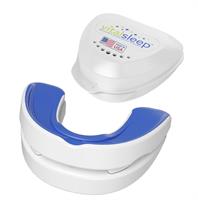
Short answer: VitalSleep is an over-the-counter mandibular advancement device (MAD). It holds your lower jaw slightly forward while you sleep, which pulls the tongue forward and leaves more room for air behind it. You mold it to your teeth in hot water, then turn a small screw on each side to move the lower tray forward in 1 mm steps. It is FDA-cleared as an aid to reduce snoring in adults 18 and over. It is not cleared to treat sleep apnea.
We bought VitalSleep and tested it ourselves (see our hands-on test and video review). This review combines that test with the manufacturer’s product pages, fitting instructions and guarantee terms, the FDA 510(k) summary for the device, and the complaints that come up again and again in buyer reviews. Product photos and app screenshots on this page are from our own test.
Price: $119.95 · Guarantee: 60 nights, money back · Warranty: 1 year of free replacements
Check Latest Price For VitalSleep
Links marked “Check price” are affiliate links; we may earn a commission at no extra cost to you.
VitalSleep at a Glance
| Type | Adjustable mandibular advancement device, boil-and-bite |
|---|---|
| Adjustment | “Accu-Adjust” screw on each side, turned with the included tool. The maker lists a range of 0–8 mm in 1 mm steps. |
| Sizes | Men’s (standard) and women’s (small, about 10% smaller arch). You can exchange sizes for free. |
| Materials | Polypropylene frame over-molded with a softer EVA lining (per the FDA filing). The maker says it is BPA-free and latex-free and has no metal parts. |
| FDA status | 510(k) cleared, K201719 (January 2021), for over-the-counter use as an aid in the reduction of snoring in adults 18+. The first version was cleared in 2010 (K092942). |
| Hinge | No. The maker says mouth movement is limited while it’s in, though the front opening lets you breathe through your mouth. |
| Guarantee | 60 nights from the delivery date, full refund on orders from vitalsleep.com, with U.S. return shipping prepaid |
| Warranty | One year of free replacements (the maker calls it a “one-year unlimited warranty”) |
| Lifespan | About a year with normal use, according to the maker. Expect less if you grind your teeth. |
| Made in | USA. Orders ship from Largo, Florida. |
Pros and Cons
Pros
- Adjusts in 1 mm steps after fitting, so you can find the smallest jaw advancement that stops your snoring instead of living with a factory guess.
- Two sizes. Most over-the-counter mouthpieces come in one size built around an average male jaw.
- The longest safety net in this price range: 60 nights to return it, then free replacements for the rest of the first year.
- Free size exchange that doesn’t use up your 60 nights.
- Front breathing opening, so it doesn’t block mouth breathing completely.
- FDA-cleared, made in the USA, BPA- and latex-free.
Cons
- $119.95 is about twice the price of SnoreRx, which offers similar 1 mm adjustment.
- No hinge. Your mouth is held in one position, which some people find confining.
- You have to turn both screws to exactly the same mark. If the two sides don’t match, the device feels crooked.
- Not for full dentures, braces, loose teeth, advanced gum disease, a large overbite, or implants less than a year old.
- The guarantee only covers orders placed on vitalsleep.com. Amazon and eBay orders go through those marketplaces’ own return rules.
Our Hands-On Test (Video Review)
We bought VitalSleep and tested it ourselves. The video below shows what’s in the box, how it works, the fitting, our results and cleaning.
- In the box: the mouthpiece in its case, fitting and adjustment tools, and a booklet explaining how it opens the airway, how to use the adjustment tool, how to fit it and how to care for it.
- Adjusting: with the tool, you turn a screw clockwise on each side to bring the lower tray forward. You can do this a little at a time until the snoring stops.
- Airway opening: about 6 mm, wide enough for the tongue to come forward into it, which can help reduce snoring further.
- Fitting: first insert the separator through the airway opening (a triangle marks the top). The booklet in our kit said to dip it in just-boiled water for exactly 10 seconds and no longer, because VitalSleep overheats easily, then bite down and mold it with your fingers for 30 seconds and set it in cold water for 30 seconds. VitalSleep’s current instructions (below) say 45 seconds in hot water, so follow the ones that come with your device. Expect a light, slightly customized impression rather than deep tooth marks.
- Results: our tester recorded snoring before using VitalSleep and snored less over two nights of wearing it (screenshots further down). An overnight oxygen recording made while wearing it stayed above the report’s warning line.
- Cleaning: a toothbrush and toothpaste, or denture cleaner, at least weekly or whenever you notice stains or odors.
- Verdict from our test: VitalSleep reduced our tester’s snoring, helped by the adjustment and the large airway opening for the tongue.
One tester’s nights are a real-world example, not a clinical trial. Snoring varies from person to person and night to night, and a snoring app or fingertip oxygen recording is not a sleep test.
How VitalSleep Works

Most snoring comes from soft tissue at the back of the throat vibrating as air squeezes past it. When you fall asleep, especially on your back, the jaw and tongue relax and drop backward and the airway narrows. Your tongue is attached to your lower jaw. Holding the jaw a few millimeters forward brings the base of the tongue forward with it and widens that space. Dentist-made sleep appliances work on the same principle. More detail is in how snoring mouthpieces work.
The upper and lower trays are molded as one piece and linked by an adjustment screw on each side. The FDA summary describes a polypropylene frame covered in a softer EVA plastic. The EVA softens in hot water so you can press your teeth into it. Graduation marks on the side show how far the lower tray has moved. That lets you set both sides to the same position and go back to a setting that worked.
One detail worth knowing: the maker currently advertises 0–8 mm of adjustment, while the 2021 FDA summary described 6 mm of forward travel. Either way, few people need the top of the range. The useful part is being able to move one millimeter at a time.
Men’s vs Women’s Size: Which Should You Get?
VitalSleep is one of the few over-the-counter mouthpieces sold in two sizes. The maker publishes these dimensions:
| Size | Length | Width | Height |
|---|---|---|---|
| Men’s (standard, white/blue) | 2.66″ (67.5 mm) | 1.97″ (50.1 mm) | 0.84″ (21.4 mm) |
| Women’s (small, white/clear) | 2.41″ (61.1 mm) | 1.88″ (47.7 mm) | 0.94″ (23.9 mm) |
The women’s size is shorter and narrower but slightly taller, because the arch is smaller. The labels are a rough guide, not a rule. A man with a narrow jaw may do better with the small size, and a woman with a wide arch may need the standard one. The maker’s advice is to start with the small size if you’re unsure, and it exchanges sizes free of charge. Its own fitting page adds that most fit complaints are a molding problem rather than a size problem. If you’re shopping specifically for a smaller device, see best snoring mouthpiece for small mouths and best snoring mouthpiece for women.
How to Fit VitalSleep


The maker says fitting takes about five minutes. Have a mug of hot water, a bowl of cold water and a timer ready before you start, because the molding window is short. Its official steps are:
- Put the mouthpiece in hot water for 45 seconds.
- Move it to cold water for 3 seconds so it’s safe to put in your mouth.
- Insert it and bite down to press your teeth into both trays. The maker’s advice is to press “like soft clay, not a bite into an apple”: firmly and evenly on both sides, without grinding or shifting your jaw. Biting too hard squeezes the warm lining too thin, and then it won’t grip your teeth.
- Check for clear impressions of your upper and lower teeth. Put it back in and open slightly. A good fit stays seated against your upper teeth.
If the impression isn’t clean, the same device can be re-molded. If the fit still isn’t right, the maker asks you to email support for a free replacement rather than forcing it. For general technique, see how to fit an anti-snoring mouthpiece.
Adjusting VitalSleep: Start at Zero, Go Slowly

The maker’s instructions are clear on one point: don’t advance it on the first night. Sleep with it at the starting position for a few nights so your mouth gets used to it. Then:
- Turn each screw clockwise with the included tool to bring the lower tray forward. You can push the tray gently with your finger to guide it.
- Set both sides to the same mark. The maker calls uneven screws “the number one fitting mistake.”
- Move in small steps and give each new setting a couple of nights before going further.
- If your jaw or teeth are sore, back off one step and stay there for a night or two.
The maker’s own timeline is a guide: get used to wearing it on nights 1–3, fine-tune it on nights 3–7, and expect many people to find their setting by around two weeks. A snoring app and your partner’s feedback are the easiest ways to judge each step. If you’ve worked through most of the range and still snore loudly, talk to a doctor rather than cranking it further. See how to adjust a snoring mouthpiece.
Our Results and What Buyers Report


Snoring-app recordings from our own test: the night before using VitalSleep (left) and the first night wearing it (right).
The pattern in buyer feedback is similar to other good MADs. People whose snoring comes from the jaw and tongue falling back, often back sleepers, tend to report quieter nights once they find the right setting, usually within the first week or two. Positive reviews frequently mention the secure fit and the ability to adjust it. Negative reviews cluster around early jaw soreness, extra saliva, the device feeling bulky or not letting the mouth close fully, and the price.
Results depend on what causes your snoring. If it’s mainly nasal (congestion, allergies, a deviated septum), a jaw-advancing device may only help partly. Compare options in snoring mouthpieces vs nasal strips. We don’t repeat the success-rate percentages that circulate for this product, because we couldn’t trace them to a published study of VitalSleep.
Common VitalSleep Complaints and Fixes
Jaw or tooth soreness
This is the most common complaint with any MAD, and the maker lists it in its warnings. It usually eases over the first week or two. The fix is to back the tray off one step. Avoid pushing the jaw forward early, which the maker calls the most common reason people give up. Stop and see a dentist if the pain is ongoing or you notice loose teeth or gum irritation. More in jaw pain from a snoring mouthpiece.
“It falls out at night”
Usually this means the impression is shallow or the size is wrong. Re-mold it, or ask for the other size. If your mouth falls wide open while you sleep, the maker says it will send a free chin strap. See snoring mouthpiece vs chin strap.
“I can’t close my mouth all the way”
The maker says many people can close fully, but people with smaller mouths may not. It notes this doesn’t stop the device from working. If it bothers you, try the smaller size.
Drooling or dry mouth
Extra saliva in the first nights is normal with any mouthpiece and listed in the warnings. Dry mouth usually means you’re breathing through your mouth around the device. Treating nasal congestion often helps.
Bite feels “off” in the morning
A slightly changed bite for a short while after you take it out is common with MADs. The maker warns that tooth movement and bite changes can happen with use. Stop if your bite doesn’t return to normal, and tell your dentist you use the device. See are snoring mouthpieces bad for teeth?
Who Should Not Use VitalSleep
The maker says VitalSleep needs enough stable natural teeth to hold on to. According to its fitting instructions and warnings, it isn’t suitable if you:
- Are under 18
- Wear braces or a retainer
- Have full dentures, loose teeth or advanced gum disease
- Have a dental implant less than a year old
- Have a large overbite
- Have central sleep apnea, a severe respiratory disorder or serious breathing difficulty (unless a doctor directs otherwise)
If you have crowns, bridges, partials or implants, ask your dentist first. The same goes for anyone with a history of TMJ pain or a jaw that clicks or locks. Denture wearers should look at a tongue-based device instead: see best snoring mouthpiece for denture wearers and who should not use a snoring mouthpiece.
Does VitalSleep Work for Sleep Apnea?
VitalSleep is cleared only as an aid to reduce snoring. The maker states that it is not intended to diagnose or treat sleep apnea. Snoring can be a sign of obstructive sleep apnea, which is linked to heart problems and drowsy-driving accidents. If you gasp or stop breathing in your sleep, wake up unrefreshed or are very sleepy during the day, see a doctor and get a sleep test before relying on a store-bought mouthpiece. If you’re diagnosed, a sleep physician or dentist can discuss oral appliances made for apnea alongside CPAP. See can snoring mouthpieces treat sleep apnea?
Cleaning and Lifespan

The maker’s care instructions:
- Clean it daily with a soft toothbrush and toothpaste in cool water. Alternatively, soak it in a denture cleaner for about 15 minutes.
- Rinse it with cool water and let it air-dry before putting it in its case.
- Never use hot or boiling water after fitting, because it can soften the lining and change the fit. Avoid bleach, harsh chemicals and abrasive cleaners.
VitalSleep typically lasts about a year with normal use, the maker says, and heavy grinders get less. This is where the warranty earns its keep: if it breaks or wears out in the first year, the maker sends a free replacement and says there’s no limit on how many. More in how to clean a snoring mouthpiece and how long snoring mouthpieces last.
Price, Guarantee and Where to Buy
VitalSleep costs $119.95, with free U.S. shipping. The guarantee is generous but has conditions:
- 60 nights from the delivery date, not the order date. Return the device, molded and used is fine, for a refund of what you paid for it. U.S. orders get a prepaid return label.
- Free size exchange at any time, without using up your 60 nights.
- One year of free replacements if it breaks, wears out or stops working.
- The 60-night guarantee covers orders from vitalsleep.com only. Amazon and eBay purchases are returned under those marketplaces’ rules. Outside the U.S., shipping and customs fees aren’t refunded.
Buying direct is the simplest way to keep all of that. Stock of each size can vary, so check that your size is available before you order. For general buying advice, see where to buy an anti-snoring mouthpiece.
Check Latest Price For VitalSleep
VitalSleep vs the Alternatives
- SnoreRx: the same 1 mm adjustment for half the price, but one size and a 30-night guarantee. See SnoreRx vs VitalSleep.
- SnoreRx Plus: adds a hinge so your mouth can open, and comes apart for cleaning. Our top pick if a rigid tray feels confining. See SnoreRx Plus vs VitalSleep.
- PureSleep: a budget MAD with three fixed positions. See VitalSleep vs PureSleep.
- ZQuiet: thin and flexible with no molding step, but only two fixed advancement levels. See ZQuiet vs VitalSleep.
- Tongue-stabilizing devices such as Good Morning Snore Solution don’t move the jaw at all, so they suit denture wearers. See VitalSleep vs Good Morning Snore Solution.
Bottom Line
VitalSleep is a solid, honest product. It has a custom boil-and-bite fit, adjusts in 1 mm steps, comes in two sizes, and is backed by one of the most generous guarantee-and-warranty packages in its class. The catch is price. If you have a normal-sized mouth and don’t grind your teeth, SnoreRx does the same core job for $60 less. If you want a hinge, SnoreRx Plus is the better fit. VitalSleep makes the most sense for smaller mouths, for teeth grinders who will benefit from a year of free replacements, and for anyone who wants plenty of time to get the setting right.
In our own test, VitalSleep reduced our tester’s snoring over two nights, and its roughly 6 mm front opening was one of the widest we have measured.
Check Latest Price For VitalSleep
VitalSleep FAQ
Does VitalSleep actually work?
For snoring caused by the jaw and tongue falling back, mandibular advancement is the best-studied type of over-the-counter mouthpiece, and VitalSleep uses that mechanism with fine adjustment. Buyer reviews are mostly positive once people find their setting. The usual complaints are early jaw soreness, drooling and bulk. It helps less when snoring is mainly nasal. The 60-night guarantee gives you time to find out.
Is VitalSleep FDA approved?
The correct term is FDA cleared. The current VitalSleep was cleared through the 510(k) pathway in January 2021 (K201719) as an over-the-counter aid in the reduction of snoring for adults 18 and older. It isn’t cleared to treat sleep apnea.
What size VitalSleep should I get?
The maker recommends the men’s (standard) size for most men and the women’s (small, about 10% smaller arch) for most women or anyone with a smaller mouth. If you’re unsure, it suggests starting small, and size exchanges are free.
How long does VitalSleep last?
About a year with normal use, according to the maker, and less if you grind your teeth. Replacements are free during the first year.
Is VitalSleep worth the money compared with SnoreRx?
Only if you’ll use what the extra $60 buys: the smaller size, 60 nights instead of 30, and a year of free replacements. If none of those matter to you, SnoreRx gives you the same 1 mm adjustment for less.
Can I buy VitalSleep on Amazon?
VitalSleep’s support pages refer to Amazon orders, but the 60-night guarantee applies only to orders placed on vitalsleep.com. Amazon returns follow Amazon’s rules. Buy direct if you want the full guarantee.
Related Comparisons
- SnoreRx vs VitalSleep
- SnoreRx Plus vs VitalSleep
- VitalSleep vs PureSleep
- ZQuiet vs VitalSleep
- VitalSleep vs Zyppah
- VitalSleep vs SleepTight