When you buy through our links, we may earn a commission. An affiliated entity may offer products or services. Learn more.
How PureSleep Compares
| Model | Type | Score | Price | Best for | |
|---|---|---|---|---|---|
| PureSleep (this review) | Adjustable MAD | 7.9 | $59.95 | Budget Pick | Check price |
| VitalSleep | Adjustable MAD | 8.8 | $119.95 | Best Warranty | Check price |
| SnoreRx Plus | Adjustable MAD | 9.0 | $99.99 | Maximum adjustability | Check price |
Prices are indicative; check the merchant for current pricing and discounts. Links marked “Check price” are affiliate links.
Our verdict: PureSleep is a budget, FDA-cleared boil-and-bite mouthpiece with three preset jaw positions. It is a sensible low-cost way to find out whether jaw advancement helps your snoring, but the position is chosen once at assembly, so it cannot be fine-tuned the way a millimeter-adjustable device can. If you already know you need precise adjustment, look at SnoreRx Plus or VitalSleep instead.
Short answer: PureSleep is a two-piece mandibular advancement device (MAD) that holds your lower jaw slightly forward to keep the airway open while you sleep. It costs $59.95, carries a 60-day money-back guarantee and has FDA clearance for over-the-counter use as an aid to reduce snoring. It is a good first mouthpiece for simple snoring; it is not the right pick if you want fine adjustment, you breathe mostly through your mouth, or you have braces, full dentures or a jaw-joint (TMJ) problem.
We bought PureSleep and tested it ourselves (see our hands-on test and video review). This review combines that test with the manufacturer's published specifications, the device's FDA 510(k) summary, independent reviews and verified-buyer reports. Product photos and snoring-app screenshots below are from our own test.
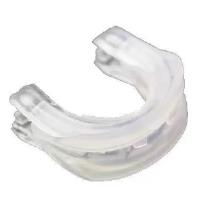
Price: $59.95 · Guarantee: 60-day money-back · FDA: cleared for OTC use (K190058)
Check Latest Price For PureSleep
PureSleep at a Glance
| Type | Mandibular advancement device (MAD), two-piece upper/lower trays |
|---|---|
| Fitting | Boil-and-bite; soft heat-moldable inner liner inside a firmer outer shell |
| Jaw positions | Three preset settings (typical bite, mild underbite, severe underbite; an overbite uses the center setting flipped over), spaced about 4 mm apart, chosen when you assemble it |
| Materials | Polypropylene shell and ethylene vinyl acetate (EVA) liner per the FDA filing; marketed as BPA-free and latex-free |
| FDA status | 510(k) cleared for over-the-counter use in April 2019 (K190058); earlier prescription version cleared in 2012 (K113022) |
| Indication | Adults 18+ as an aid to reduce snoring |
| Guarantee | 60 days, refund or exchange; prepaid return label for U.S. orders |
| Typical lifespan | Roughly 4–12 months, shorter if you grind your teeth |
| Company | The Pure Sleep Company (Sleep Science Partners, Inc.), California |
Our Hands-On Test (Video Review)
We bought PureSleep and tested it ourselves. The video below shows what’s in the box, the fitting, our tester’s results and cleaning.
- In the box: the mouthpiece in its case and an instruction manual covering what causes snoring, how PureSleep works, how to prepare and fit it, and what to expect while wearing it.
- Settings: it comes as two pieces (the bottom has holes, the top has pegs) that join in one of three positions: the two front holes for a typical bite, the center holes for a mild underbite and the back holes for a severe underbite. For an overbite, the manual says to use the center holes and flip the device over.
- Airway opening: only about 3 mm, which makes it less suited to mouth breathing.
- Fitting: boil 1–2 quarts of water, put the assembled device in and hold it under with a spatula for 2 minutes at a low boil, take it out and wait 15 seconds, then bite down firmly for 30 seconds while keeping your lower jaw forward. You should see clear tooth impressions, and the soft plastic fuses the two pieces together, locking in your setting. Excess material can be trimmed off.
- Results: our tester recorded snoring before using PureSleep and had reduced snoring over three nights wearing it (screenshots further down). An overnight oxygen recording while wearing it showed normal breathing.
- Cleaning: brush it with a toothbrush and toothpaste, or soak it with effervescent oral-device cleaning tablets, and store it somewhere cool and dry.
One tester’s nights are a real-world example, not a clinical trial. Snoring varies from person to person and night to night, and a snoring app or fingertip oxygen recording is not a sleep test.
How PureSleep Works
Most snoring comes from soft tissue at the back of the throat vibrating as air squeezes past it. When you fall asleep on your back, your lower jaw and tongue relax and drop backward, narrowing that space. A mandibular advancement device fits over both rows of teeth and holds the lower jaw a few millimeters forward, which pulls the tongue base forward with it and widens the airway. PureSleep works exactly this way; there is no tongue strap or suction component. For a deeper explanation, see how snoring mouthpieces work.
PureSleep was developed by a dentist and a physician, Dr. Douglas Fenton, DDS, and Dr. Bernard Kramer, MD, and has been sold for more than 15 years. A prescription-only version was cleared by the FDA in 2012; the current over-the-counter version received its own 510(k) clearance in 2019. The FDA filing describes the OTC device as technologically identical to the earlier Rx version, with labeling rewritten for consumers.
One point the old version of this review got wrong: the over-the-counter PureSleep is cleared to reduce snoring, not to treat sleep apnea. If you have loud snoring with gasping, choking, witnessed pauses in breathing or heavy daytime sleepiness, see a doctor for a sleep study before using any store-bought mouthpiece. Our guide on whether snoring mouthpieces can treat sleep apnea explains why.
Design and Materials

PureSleep comes as two separate trays, one for the upper teeth and one for the lower, that snap together. Each tray has a firm outer shell (polypropylene, per the FDA filing) lined with a softer EVA thermoplastic that becomes moldable in hot water. The manufacturer describes this as a “dual-polymer” design and says its materials are US-sourced, BPA-free and latex-free.
The jaw position is set by which slot the two halves are joined in. There are three settings, roughly 4 mm apart, that the instructions match to your natural bite. In the kit we tested, the front pair of holes was for a typical bite, the center pair for a mild underbite and the back pair for a severe underbite; for an overbite, the manual says to use the center holes with the device flipped over. Once the trays are assembled and molded, the setting is effectively locked. That is the biggest practical difference from devices like SnoreRx, which advances in 1 mm steps up to 6 mm and can be changed any night.
The front of the device has small breathing holes. In our test the airway opening measured only about 3 mm, so they don’t pass much air, which matters if you breathe through your mouth at night or have a stuffy nose. If that’s you, a model with a larger front opening, such as VitalSleep, is usually easier to live with.
How to Fit PureSleep (Step by Step)

Fitting takes about 15 minutes. Read the included booklet first, because assembling the trays in the wrong position is the most common reason people end up with a sore jaw or a device that doesn’t help.
- Identify your bite. Bite your back teeth together and look in a mirror. If your upper front teeth sit well in front of your lower teeth, you likely have an overbite; if the lower teeth sit forward, an underbite. Most people use the standard setting.
- Assemble the trays in the matching position before heating them.
- Heat the device for the time stated in the instructions (the kit we tested said 2 minutes at a low boil, held under with a spatula), then wait about 15 seconds so it won’t burn your mouth.
- Bite in firmly and evenly, pressing the soft liner around your teeth with your lips and tongue, then hold still until the material starts to set.
- Set the impression in cool water and check the fit. It should stay in place without you clenching.
If the first impression is loose or uneven, the liner can be re-heated and re-molded; independent reviews cite up to three attempts. If you damage the device during fitting, the company has historically exchanged it through customer support. More general tips are in our guide on how to fit an anti-snoring mouthpiece.
Comfort and the First Week
Expect an adjustment period of several nights. The most commonly reported early effects with PureSleep, as with any MAD, are:
- Morning jaw or tooth soreness that usually fades within 30 minutes of taking the device out and becomes less noticeable over the first week or two.
- Extra saliva or drooling for the first few nights while your mouth gets used to a foreign object.
- A slightly “off” bite in the morning. Chewing gently or clenching your back teeth together for a minute usually resets it.
- Bulk. Two full trays plus the outer shell take up more room than slimmer one-piece designs; people with small mouths sometimes notice this.
Because the advancement can’t be backed off in small steps, a jaw that feels too far forward on the standard setting has fewer fixes than with an adjustable device. If soreness lasts beyond two weeks or you feel clicking or pain in the jaw joint, stop and talk to a dentist. Our article on jaw pain from snoring mouthpieces covers what’s normal and what isn’t.
Does PureSleep Work?


Mandibular advancement is the best-studied type of over-the-counter snoring mouthpiece, and for people whose snoring comes from the jaw and tongue falling back, it often reduces snoring noticeably. PureSleep uses that same mechanism, so it can work well when the preset position suits your jaw. Verified-buyer reviews are mixed in a predictable way: many report quieter nights and a happier partner, while the negative reviews cluster around fit (the device loosening or popping out), soreness, and not being able to fine-tune the position.
We don’t repeat the “80–90% success rate” figures that circulate for this product: we couldn’t trace them to a published study of PureSleep, and the FDA clearance was based on equivalence to earlier devices, not on a trial proving a specific success rate. The honest summary is that PureSleep helps a good share of simple snorers, and the 60-day guarantee gives you enough time to find out if you’re one of them. Recording a few nights with a snoring app before and after, as we did in our own test (screenshots above), is the easiest way to judge. In our test, PureSleep reduced our tester’s snoring over three nights.
It is unlikely to help much if your snoring comes mainly from nasal congestion, or if you snore just as loudly with your mouth closed. In that case, compare options in snoring mouthpieces vs nasal strips.

Pros and Cons
Pros
- Low price ($59.95) for an FDA-cleared MAD
- 60-day money-back window, longer than SnoreRx’s 30 nights
- Separate overbite/underbite settings help people whose bite isn’t “average”
- Liner can be re-molded if the first impression goes wrong
- Long track record (prescription version cleared in 2012)
Cons
- Jaw position is chosen at assembly and can’t be fine-tuned later
- Small breathing holes; not ideal for mouth breathers
- Two-tray design feels bulky to some users
- No warranty once the trial ends; typically needs replacing within a year
- Not for braces, full dentures, or existing TMJ problems
Common PureSleep Complaints (and Fixes)
“It falls out at night”
Almost always a shallow impression. Re-heat and re-mold, biting a little more firmly and pressing the soft liner around your teeth with your fingers and lips. Make sure your teeth are clean and the device is fully cool before wearing.
“My jaw hurts in the morning”
Mild soreness the first week is normal. If it persists, the setting may advance your jaw too far. Because PureSleep only has three positions, the fix is to reassemble in a less-advanced setting and re-mold, or move to a device with 1 mm adjustment.
“I drool / my mouth is dry”
Extra saliva typically settles within a few nights. Dry mouth usually means you’re breathing through your mouth around the device; treating nasal congestion often helps.
“My bite feels different”
A temporary morning bite change is common with all MADs. A bite change that doesn’t go away within an hour, or tooth movement over months, is a reason to see a dentist. See are snoring mouthpieces bad for teeth?
Who Should Not Use PureSleep
Based on the manufacturer’s labeling and independent reviews, skip PureSleep (or check with a dentist or doctor first) if you:
- Are under 18
- Have diagnosed or suspected sleep apnea, central sleep apnea, or another breathing disorder (see a doctor first)
- Wear braces or full dentures; for partials and implants, ask your dentist (see best snoring mouthpiece for denture wearers)
- Have a history of TMJ/TMD, loose teeth, or active gum disease
- Mostly breathe through your mouth because of chronic nasal blockage
Our full checklist is in who should not use a snoring mouthpiece.
Cleaning and Lifespan
The FDA filing for the OTC version calls for daily cleaning with a toothbrush and toothpaste or an effervescent cleaning tablet, plus a weekly deep clean. Rinse with cool water, not hot, because heat can soften the liner and change the fit. Let it air-dry and keep it in the included case. Most users get roughly 4 to 12 months before the liner wears or the fit loosens; teeth grinders land at the short end. Replace it if you see cracks, the liner thins, or it starts to smell despite cleaning. More detail: how to clean a snoring mouthpiece and how long snoring mouthpieces last.
Price, Guarantee and Where to Buy
PureSleep lists at $59.95. The 60-day guarantee lets you return it for a refund or exchange; U.S. orders get a prepaid return label, and international customers need to contact support first. PureSleep also appears on Amazon; the company says Amazon purchases may not be returnable to Amazon itself, but it will handle a replacement or refund for the same 60-day period. Buying direct keeps the return process simplest.
PureSleep vs. Alternatives
- PureSleep vs SnoreRx: similar price; SnoreRx adds 1 mm adjustment (0–6 mm), but only a 30-night trial. Both had airway openings of about 3 mm in our tests.
- SnoreRx Plus vs PureSleep: SnoreRx Plus costs more ($99.99) but adds an upgraded, softer-fitting design with the same fine 1 mm adjustment.
- VitalSleep vs PureSleep: VitalSleep ($119.95) offers stepless screw adjustment and a longer warranty.
- ZQuiet vs PureSleep: ZQuiet needs no boiling and allows the mouth to open and close, but has only two fixed advancement sizes.
Bottom Line
PureSleep is an honest, inexpensive MAD with a long history and a generous 60-day trial. It suits first-time users with simple snoring who want to test whether jaw advancement works for them. Its weak points are the lack of fine adjustment and limited airflow, so people with sensitive jaws or mouth breathers are better served by an adjustable model.
FAQ
Do PureSleep reviews say it works?
Mostly, with caveats. Verified buyers frequently report quieter nights after the first week, while negative reviews focus on loose fit, morning jaw soreness, and the inability to fine-tune the jaw position. It works best when your snoring comes from the jaw and tongue falling back.
Is PureSleep the same as “Pure Sleep”?
Yes. “Pure Sleep” is just the spaced spelling of PureSleep, sold by The Pure Sleep Company. There is no separate product.
Is PureSleep FDA approved?
It is FDA cleared, not approved. Mouthpieces like this go through the 510(k) pathway: the OTC PureSleep was cleared in April 2019 (K190058) as an aid to reduce snoring in adults 18 and over. It is not cleared to treat sleep apnea when bought over the counter.
Can PureSleep move your teeth?
Any mouthpiece that holds the jaw forward every night can, over long periods, cause bite changes or tooth movement in some people. Short-lived morning bite changes are common and harmless. If your bite still feels different hours later, or you notice teeth shifting, stop and see a dentist.
How long does PureSleep last?
Typically 4 to 12 months with nightly use, less if you grind your teeth. Replace it when the liner wears thin, the fit loosens, or you see cracks.
Is PureSleep available on Amazon?
Yes, PureSleep is listed on Amazon, but the manufacturer notes Amazon purchases may not be returnable through Amazon; the company handles refunds or replacements within 60 days instead. Buying direct keeps the guarantee straightforward.
Comments
-
Carol Castagna
June 3rd, 2025
I am purchasing PureSleep Mouthpiece.