When you buy through our links, we may earn a commission. An affiliated entity may offer products or services. Learn more.
Bottom line: SnoreRx Plus takes it overall (9.0 vs 8.5), leading most on effectiveness and best suited for maximum adjustability. Choose ZQuiet if comfort & mouth-breathers is your priority.
Links marked “Check price” are affiliate links; we may earn a commission at no extra cost to you.
SnoreRx Plus and ZQuiet are the two hinged mouthpieces people most often weigh against each other, and the choice comes down to precision versus simplicity. SnoreRx Plus ($99.99) is molded to your teeth and adjusts in 1 mm steps, with a hinge so your mouth can still open. ZQuiet ($59.95 for two sizes) is soft, ready to wear and flexible, but offers only two fixed jaw positions. If you want to fine-tune the setting and keep one device for most of a year, SnoreRx Plus is the better buy. If you want the gentlest, cheapest way to try a mouthpiece, start with ZQuiet.
How we tested: We bought and tested both SnoreRx Plus and ZQuiet ourselves; our hands-on notes and video reviews are below.
This page focuses on what you get for the extra $40, how the two hinges differ, and what each costs over a year. For the cheaper, non-hinged SnoreRx against ZQuiet, see ZQuiet vs SnoreRx.

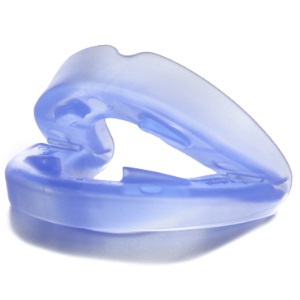
SnoreRx Plus vs ZQuiet: Comparison Table
| Feature | SnoreRx Plus | ZQuiet |
|---|---|---|
| Price (maker) | $99.99 (2 for $154.98) | $59.95 (2-Size Starter Pack); single-size refills $39.95 |
| Guarantee | 30 nights, new customers at snorerx.com; shipping not refunded | 60-night Better Sleep Guarantee; shipping not refunded |
| Hinge | Rigid hook-on hinge: mouth opens and closes vertically | Flexible “living hinge”: mouth opens, slight side-to-side give |
| Fit | Boil-and-bite, molded to your teeth (two attempts) | Universal soft trays; no molding; edges can be trimmed |
| Jaw advancement | 1 mm steps, numbered gauge, starts at 1 mm | Two fixed sizes: about 2 mm and 6 mm |
| Cleaning | Comes apart into three trays | One piece; brush and air-dry |
| Replacement (maker guidance) | Not stated for the Plus; SnoreRx says ~6–11 months for the original | Every 4–6 months |
| FDA | Maker states FDA-cleared OTC for snoring in adults | 510(k) K180124, OTC, snoring in adults 18+ |
| Our score | 9.0 / 10 (effectiveness 9.3) | 8.5 / 10 (comfort 9.2) |
Prices checked on snorerx.com and zquiet.com in October 2026.
Quick Verdict
- SnoreRx Plus if you snore loudly most nights, want the device molded so it stays put, or need a setting between ZQuiet’s two sizes.
- ZQuiet if you are new to mouthpieces, want something soft and thin, or want 60 nights to decide.
- Neither if you wear dentures or braces, have loose teeth, gum disease or TMJ problems, or have signs of sleep apnea (see who should skip both).
- Our hands-on tests: SnoreRx Plus cut our tester’s snoring by more than 70% at its default setting; ZQuiet reduced snoring too but caused sore bottom front teeth each morning.
Two Kinds of Hinge
Both devices let you open your mouth, which is why people compare them. The hinges work very differently, though.
SnoreRx Plus is three rigid pieces. The upper tray hooks onto the back of a middle tray, and that hook acts as the hinge. Your lower jaw is held at a fixed, numbered setting, while your mouth can open and close vertically. The maker describes it as letting your jaw open and close “instead of being held in one position.”
ZQuiet is one soft piece. The upper and lower trays are joined by a flexible strip of the same material, the “living hinge.” It bends in every direction, so you can open your mouth, talk briefly, sip water, and move your jaw slightly side to side. The trade-off is control: a flexible strip holds the jaw less firmly than a locked adjuster, and it softens and stretches with wear.
In short, the SnoreRx Plus hinge adds freedom to a precise device, while ZQuiet’s hinge is the device. If you have worn a rigid mouthguard and hated it, either will feel less confining. If you want the most give and the least bulk, ZQuiet wins. If you want freedom without giving up a molded, fixed setting, SnoreRx Plus wins.
What the Extra $40 Buys You
SnoreRx Plus costs $40 more than the ZQuiet starter pack. Here is what that money pays for:
- In-between settings. ZQuiet jumps from about 2 mm to about 6 mm. SnoreRx Plus starts at 1 mm and moves one millimeter at a time, and the maker says most people settle between 3 and 5 mm, which is exactly the gap ZQuiet skips. That is the main reason SnoreRx Plus scores higher for effectiveness (9.3 vs 8.3).
- A molded fit. Boil-and-bite trays take an impression of your teeth, so they grip better than universal trays. ZQuiet says its device works best with fairly straight front teeth; if yours are crowded or uneven, a molded device is more likely to stay in.
- Easier deep cleaning. The Plus comes apart into three trays.
- Longer life between replacements, probably. The maker doesn’t publish a lifespan for the Plus, but it uses the same Thermal Matrix material and fitting as the original SnoreRx, which the maker says typically lasts 6–11 months. ZQuiet recommends replacing every 4–6 months.
What the extra money does not buy: a longer trial (ZQuiet’s is twice as long), or more comfort for most people at the start. ZQuiet scores higher for comfort (9.2 vs 8.8) and ease of use (9.0 vs 8.5).
Check SnoreRx Plus price → Check ZQuiet price →
First-Year Cost
Because both wear out, the sticker price is only part of the picture. A rough estimate for nightly use, before shipping, subscriptions or discounts:
| SnoreRx Plus | ZQuiet | |
|---|---|---|
| Starting purchase | $99.99 | $59.95 (two sizes) |
| Replacements in year one | About one, if it lasts like the original SnoreRx | One or two single-size refills at $39.95 |
| Rough first-year total | About $155–$200 (the two-pack is $154.98) | About $100–$140 |
ZQuiet stays cheaper over a year, and it offers discounted subscription refills. Teeth grinders wear through both faster; ZQuiet sells a Firm version with a stronger hinge for clenchers. See how long snoring mouthpieces last.
Fitting and the First Two Weeks
ZQuiet: rinse it and wear Size 1. Give it at least a week before deciding whether you need Size 2, and record your snoring so you are comparing real numbers (see snoring apps).
SnoreRx Plus: about ten minutes of fitting. Bring a mug of water to a full boil in the microwave, submerge the device for one minute, dip it in cool water, bite for 30 seconds, then let it set for five minutes. You get two attempts, so watch the maker’s video first. Then wear it at the 1 mm setting, and advance one millimeter after every three to five nights until the snoring stops. Our fitting guide and adjustment guide cover the details.
With either device, expect some morning jaw or tooth tenderness and extra saliva at first. The SnoreRx maker suggests wearing it for one to three hours while awake during the first two or three days. Back off a setting (or go back to ZQuiet Size 1) if soreness lingers, and stop and see a dentist if pain persists or your bite doesn’t return to normal. See jaw pain from a snoring mouthpiece and how long it takes to get used to a mouthpiece.
A Sensible Order to Try Them
If you are not sure a mouthpiece will work for you, a common path is to start with ZQuiet. It costs less, you can wear it the same night, and the 60-night guarantee gives you time to find out whether jaw advancement reduces your snoring. If it helps but Size 1 isn’t quite enough and Size 2 is too much, or it keeps falling out, that is the signal to move to an adjustable, molded device like SnoreRx Plus.
If you already know you snore heavily every night, or a previous universal mouthguard didn’t stay in, skip straight to SnoreRx Plus. Its 30-night window is shorter, so do the fitting carefully and start adjusting early.
Our Hands-On Tests
We bought and tested both of these mouthpieces ourselves and filmed each test for our YouTube channel.
SnoreRx Plus
We bought SnoreRx Plus and tested it ourselves. It arrived with the fitting handle already in place, plus a case and instructions. We fitted it with a cup of water boiled in the microwave: 60 seconds in the water, a firm 30-second bite and 5 minutes in cool water, which left a clear impression of the teeth. Tested at the factory default setting, with no extra advancement, our recordings consistently showed snoring reduced by more than 70%. If you do advance it, the instructions say to go 1 mm at a time, every few nights.
Full details, photos and screenshots are in our SnoreRx Plus review.
ZQuiet
We bought ZQuiet and tested it ourselves. The box held a case with two mouthpieces in different sizes, plus three booklets: instructions for use and care, sleep tips, and a booklet for couples. There is nothing to boil; the soft, flexible trays are ready to wear. Fully closed, the front opening is about 3 mm, though the hinge usually keeps the mouth open a little wider. Over a few nights, snoring-app recordings showed quieter snoring while wearing it. It was easy to use, but our tester woke every morning with soreness between the bottom front teeth and lip, with both sizes. We put that down to the trays not being molded to the teeth.
Full details, photos and screenshots are in our ZQuiet review.
What our testing adds to this comparison: Both reduced our tester’s snoring. ZQuiet was easier to start with (nothing to boil), but it left our tester with sore bottom front teeth every morning. SnoreRx Plus took ten minutes to fit and then worked well at its default setting.
One tester’s nights are a real-world example, not a clinical trial. Snoring varies from person to person and night to night, and a snoring app or fingertip oxygen recording is not a sleep test.
Who Should Skip Both
- Denture wearers: both need natural teeth to grip. A tongue-stabilizing device is the usual alternative; see SnoreRx Plus vs Good Morning Snore Solution.
- Anyone with loose teeth, gum disease, braces, recent dental work, or a history of TMJ disorder. Check with your dentist first; see mouthpieces and TMJ.
- Anyone under 18.
- Anyone with possible sleep apnea. Both are cleared only to reduce snoring. Snoring can be a sign of obstructive sleep apnea, so pauses in breathing, gasping, morning headaches or heavy daytime sleepiness mean you should see a doctor before self-treating. Read can snoring mouthpieces treat sleep apnea?
Related Comparisons
- ZQuiet vs SnoreRx
- SnoreRx vs SnoreRx Plus
- SnoreRx Plus vs VitalSleep
- SnoreRx Plus vs PureSleep
- ZQuiet vs VitalSleep
- Zyppah vs ZQuiet
Frequently Asked Questions
Is SnoreRx Plus better than ZQuiet?
For precise, long-term use, yes: it scores 9.0 overall against ZQuiet’s 8.5 in our ratings, mainly because it is molded to your teeth and adjusts in 1 mm steps. ZQuiet is better if comfort, simplicity, a lower price and a longer 60-night guarantee matter more to you.
Do both SnoreRx Plus and ZQuiet let you open your mouth?
Yes. SnoreRx Plus has a rigid hinge that lets your mouth open and close vertically. ZQuiet’s soft living hinge lets your mouth open and gives a little side-to-side movement too.
Which is more comfortable?
ZQuiet, for most people. It is thinner and softer. SnoreRx Plus is bulkier but grips better, and you can reduce the setting by 1 mm if your jaw is sore.
Can I adjust ZQuiet like SnoreRx Plus?
No. ZQuiet comes in two fixed sizes, about 2 mm and 6 mm of advancement. SnoreRx Plus adjusts one millimeter at a time.
Which lasts longer?
ZQuiet recommends replacing its mouthpiece every 4–6 months. The SnoreRx maker doesn’t give a figure for the Plus, but says the original SnoreRx, which uses the same material, typically lasts 6–11 months.
Is ZQuiet or SnoreRx Plus FDA approved?
Both are sold as FDA-cleared (the correct term for this type of device) over the counter to reduce snoring in adults. The FDA database lists the standard ZQuiet under 510(k) K180124. Neither is cleared to treat sleep apnea.
Thinking of switching? See ZQuiet alternatives matched to the most common ZQuiet complaints.